Posts

Showing posts with the label braided flexible copper wire connectors

Trend of Application: Copper Wire & Cable Products

Image
Industrial development is backed by metallurgical advancement of the copper wires. Wire and cable products are being used in the developed countries as well as newly industrialized regions of the world. In western countries alone, more than 80 percent of all copper and its alloys are used for the purpose of electrical connectivity. Copper wires and the cables made of different types of windings like stranded copper wire and bunched copper wire that have distinct physical and electrical properties. The most basic type of copper cable is the bare copper wire . It is used in the production of wire rods with thin dimensions. It can be recycled easily from the base scrap materials.  What are the primary types of copper wire used in the industry?  Depending on the application and niche of the industrial set-up, the wire and cable mad of copper can be branded in the following categories.  - Building copper wire   - Magnet wire  - Telecommunicatio...
Why Tinned Copper Wire is better than Bare ones?

Image
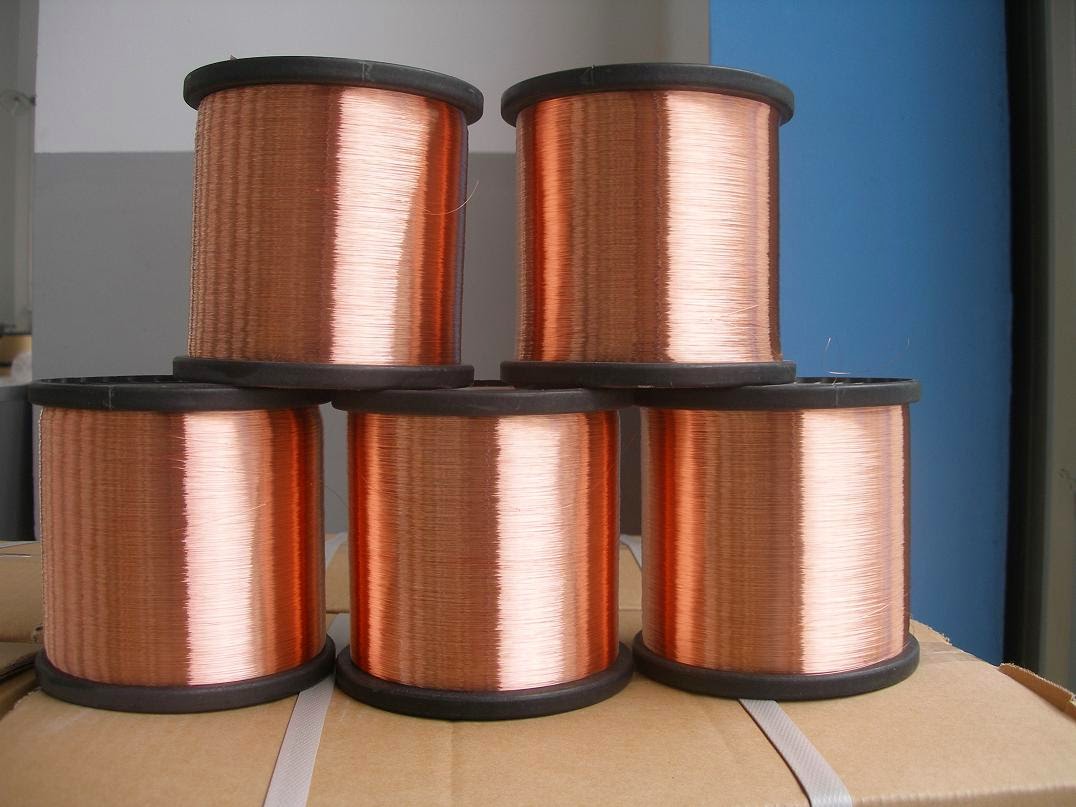
Copper wires that are available in the market today are either bare wires, insulated with nickel or tin or bunched copper wires . The bare wires are rated under the regular bare 12 gauge copper wire. We take a close look at how bare copper wires are different from the tinned ones. Bare copper is a great choice in industries concerned with the manufacturing of electrical equipments and associated appliances and products. Car and domestic appliances are all driven by power connected by copper wires. Great conductivity doubled by extremely good anti-corrosion properties make copper wires made in bare form best option to be used in internal circuits as well as external relays used in transformers and over-head transmission lines. It has a fairly good tensile strength which means that it does not   get snapped in heavy rains or thunderous storms.   The durability is very promising and comes with good workable features. Bare copper wires are easy to draw and flatten and ca...

Induction Cooking with Copper Coils

Image
What is Induction Cooking? Induction heating or wherein heat is generated directly in the cooking pot rather than transfer of heat from electric coil or burning flame to the cooking pot is the theory used in case of induction cooking. The vessels used for cooking thus have to be ferromagnetic in property to support the theory of induction cooking. However, any metallic pot can be used, but steel vessels are preferred because of its magnetic properties. The magnetic characteristics of the steel vessel concentrates the induced current in a thin layer near the surface rather than penetrating too far as in case of aluminum vessels, thus making the heating more effective. In addition, in case of aluminum vessels, the induced current also faces certain amount of resistance from the metal. Ferromagnetic pots created especially for the induction cookers are specially designed so that they stick to the magnet. Where Copper is used in Induction Cookers? A coil of copper is placed ju...